




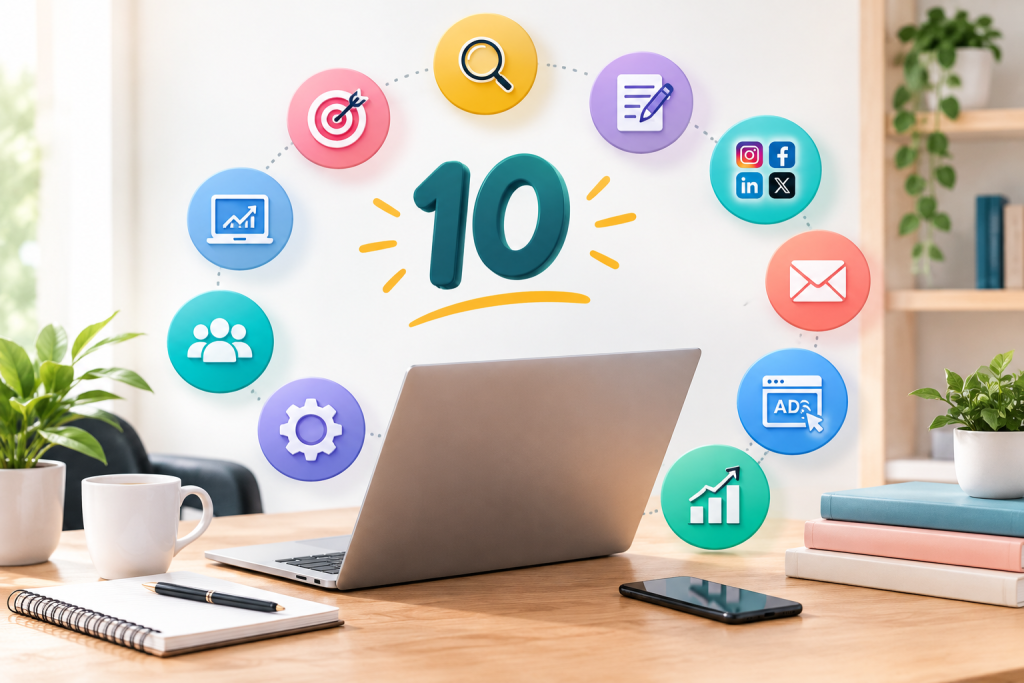
10 Digital Marketing Strategies Every Business Should Know
In today’s competitive online world, having a strong digital presence is essential for every business. Whether you run a small local business, a startup, or an established company, the right digital marketing strategy can help you reach your target audience, build brand awareness, generate leads, and increase sales.
Digital marketing is not about using every available platform. It is about choosing the right strategies for your business and using them consistently. Here are 10 digital marketing strategies every business should know.
1. Know Your Target Audience
Before starting any marketing campaign, understand who your ideal customers are. Identify their age, interests, needs, problems, online behavior, and purchasing habits.
A clear understanding of your target audience helps you create relevant content and reach the people who are most likely to become your customers
2. Focus on Search Engine Optimization
Use relevant keywords, create useful content, optimize your website pages, improve loading speed, and make sure your website is mobile-friendly. A strong SEO strategy can bring consistent organic traffic to your website.
3. Create Valuable Content
Content marketing is one of the most effective ways to attract and educate your audience. Create content that answers questions, solves problems, and provides genuine value.
You can use blog articles, videos, infographics, social media posts, guides, and case studies to connect with your audience and establish your brand as a trusted source.
4. Use Social Media Marketing
Social media allows businesses to connect directly with their customers. Choose platforms where your target audience spends the most time and create content specifically for those platforms.
Consistent posting, engaging visuals, useful information, and active communication with followers can help increase brand awareness and customer engagement.
5. Invest in Paid Advertising
Organic marketing can take time. Paid advertising can help businesses reach a targeted audience more quickly.
Platforms such as Google Ads and social media advertising allow you to target users based on factors such as interests, location, demographics, and online behavior. Always monitor your campaigns and optimize them based on performance.
6. Optimize Your Website
Your website is often the first major interaction a potential customer has with your brand. Make sure it is professional, fast, easy to navigate, and mobile-friendly.
Clear service information, strong calls-to-action, simple navigation, and an easy contact process can help turn website visitors into leads and customers
7. Build an Email Marketing Strategy
Email marketing is an effective way to maintain relationships with existing and potential customers. Build an email list and share useful content, updates, offers, newsletters, and personalized messages.
A well-planned email strategy can help increase customer loyalty and encourage repeat purchases.
8. Use Influencer and Partnership Marketing
Collaborating with relevant influencers, creators, or complementary businesses can help you introduce your brand to new audiences.
The key is to choose partners whose audience matches your target customers. Authentic and relevant collaborations are usually more effective than simply choosing someone with a large following
9. Use Marketing Automation
Marketing automation can save time and make your campaigns more efficient. Businesses can automate tasks such as email follow-ups, lead nurturing, appointment reminders, and customer communication.
Automation allows you to stay connected with your audience while reducing repetitive manual work.
10. Track Results and Improve
One of the most important digital marketing strategies is measuring your results. Track important metrics such as website traffic, leads, engagement, conversions, advertising performance, and return on investment.
Use these insights to understand what is working and what needs improvement. Digital marketing is an ongoing process, so continuously testing and optimizing your strategies is essential
Conclusion
A successful digital marketing strategy combines different channels and focuses on the needs of your target audience. From SEO and content marketing to social media, paid advertising, email marketing, and analytics, each strategy can contribute to long-term business growth.
The most important thing is to start with a clear goal, understand your audience, choose the right channels, and consistently measure your results.
The right digital marketing strategy can help your business become more visible, reach the right customers, and grow in the digital world.